
histoire de style 2026 collection
nom : boucheron
prénom : frédéric
Boucheron, through the prism of Frédéric – four High Jewelry creations that tell the Maison’s story. The first jeweler to open a boutique on Place Vendôme, Frédéric defied convention to write a new chapter in Parisian jewelry. His beloved living nature – in all its imperfect, true-to-life realism – became his artistic language. As the son of a draper, he approached jewelry as a form of couture. His pieces always centered on the individual and were designed to meet the aspirations of their era. Histoire de Style 2026: a collection that paints a sensitive portrait. Claire Choisne and her studio pay tribute to Frédéric Boucheron’s pioneering spirit.
The address
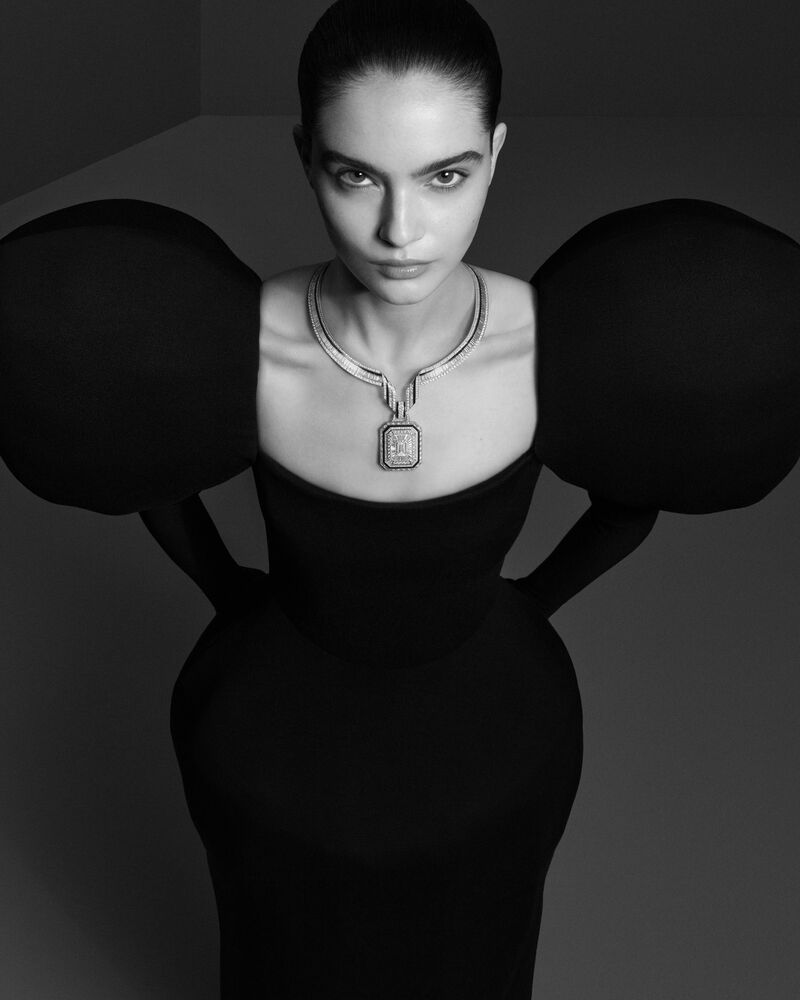
In the late 19th century, the Rue de la Paix in Paris was home to all the most prestigious jewelry and couture houses. Nearby Place Vendôme was still a residential neighborhood, formally magnificent but very quiet. No one had a sense of its potential yet. No one, that is, except Frédéric Boucheron. He noticed that the square was strategically located along the route taken by fashionable ladies on their daily stroll to the Tuileries Gardens. While others wandered by without pausing, he realized that this majestic architecture made the ideal backdrop for his jewelry creations. And then there was the light. Number 26 is a corner building that catches the sun all day long, so precious gems in its window displays would sparkle beautifully. In 1893, Frédéric Boucheron took a leap of faith and became the first of the great contemporary jewelers to open a store on Place Vendôme, in the Hôtel de Nocé. His intuition was vindicated a few years later, when all the other celebrated jewelers followed suit, making Place Vendôme synonymous with High Jewelry the world over.
Claire Choisne has reinterpreted a necklace from the archives, whose pendant calls to mind an aerial view of the octagonal Place Vendôme. She’s made it sharper, tautening its lines and playing on the stark contrast of monochrome white gold and diamonds against deep black lacquer. At the heart of the design is a 10.01-carat emerald-cut diamond. The challenge for the artisans was to impart fluidity to this uncompromising geometry: the collar section, with its black lacquer border, appears to run seamlessly around the throat in a single piece, despite being made up of multiple articulated elements. The baguette diamonds were also recut and oriented so they follow the natural curve of the neck collar.
1,107 hours of work.
The spark
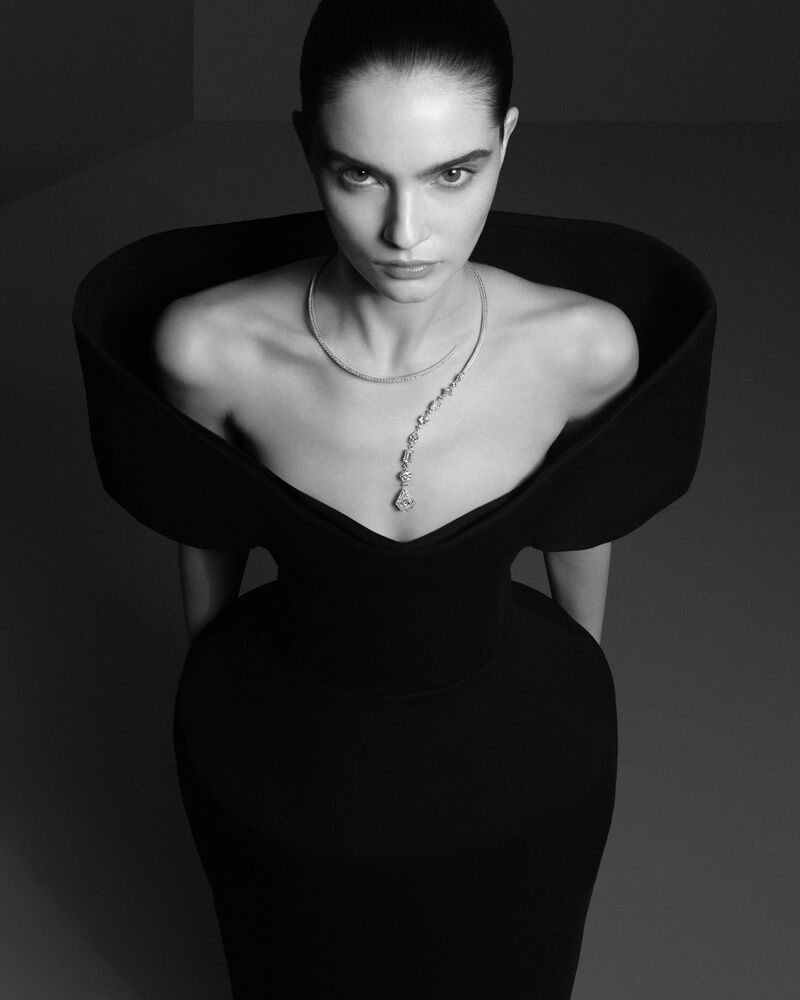
Frédéric Boucheron paid close attention to the women around him, noticing how physically constrained they were by corsets, stiff garments, and heavy, rigid jewelry that meant they couldn’t move freely. While his contemporaries upheld these conventions, Frédéric challenged them. He believed that jewelry should fit the body and adapt itself to the wearer, not the other way around. This observation sparked a simple yet groundbreaking idea, and in 1879 he invented a necklace design that innovated both in terms of form and construction. The world’s first claspless necklace, it could easily be slipped around one’s throat without a maid’s assistance. Thanks to a hidden leaf spring system – an assemblage of myriad tiny components linked together – the necklace was beautifully supple and fluid. Yet in a mark of exceptional craftsmanship, this complex mechanism (developed exclusively in the Boucheron workshops) remained almost imperceptible to the eye. The necklace’s asymmetrical shape was very unusual for the time, earning it the name Question Mark. This piece was among the Boucheron jewelry that garnered the Grand Prix at the 1889 Paris World’s Fair a decade later.
An archive photograph of a Question Mark necklace from 1884 inspired Claire Choisne to design a tribute to this Boucheron icon, with eight diamonds spotlighted in its cascading centerpiece. First in the sequence is a 0.81-carat marquise, followed by a 1.71-carat Asscher cut, a 1.76-carat oval, a 2.09-carat hexagonal, a 2.02-carat pear-cut, a 3.07-carat emerald cut, and a 2.96-carat round brilliant. The composition reaches its crescendo in a 5.01-carat kite diamond encircled by a halo of baguette diamonds. This iteration of the Question Mark posed a real challenge in terms of weight and equilibrium, and the design called for a number of delicate and imperceptible articulations to make it comfortable to wear.
323 hours of work.
The silhouette
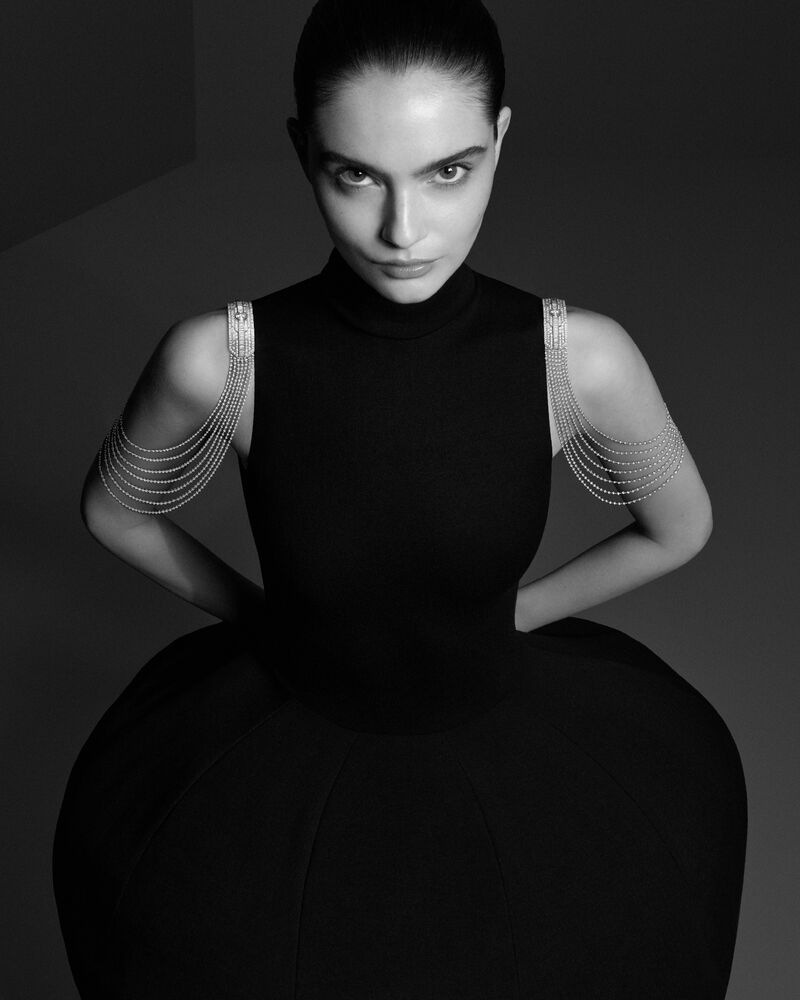
Frédéric Boucheron didn’t view jewelry through the same lens as other jewelers; for him, it was an extension of clothing, another element that made up a person’s style. Being the son of a cloth merchant, he grew up surrounded by precious silks and laces, and had a keen sense of the textures, fluidity and drape of fabrics. Frédéric didn’t lose sight of this heritage when he became a jeweler. On the contrary – everything he knew about couture, he applied to his jewelry. He fashioned supple pieces of deceptive simplicity. He created designs that could be worn in several ways; jewelry that transformed to serve different functions, so women of the era could adapt it for any occasion. But his most visionary idea was to look beyond conventional jewelry sets and dream up new ways of adorning the body, at the intersection of clothing and jewels.
Claire Choisne has created a sculptural piece where white gold and diamonds mold around the body’s contours and follow its movements. This technically complex jewel metamorphoses so it can be worn in six different ways. Boucheron’s artisans achieved this feat of transformability by constructing a collar section with a system of completely invisible clasps hidden within it. Multiple precisely fashioned articulations mean the piece can be folded and divided up to be reborn in a new form. Over seven meters of bezel-set diamonds make up its chains, including more than 2,500 round diamonds.
1,652 hours of work.
The untamed
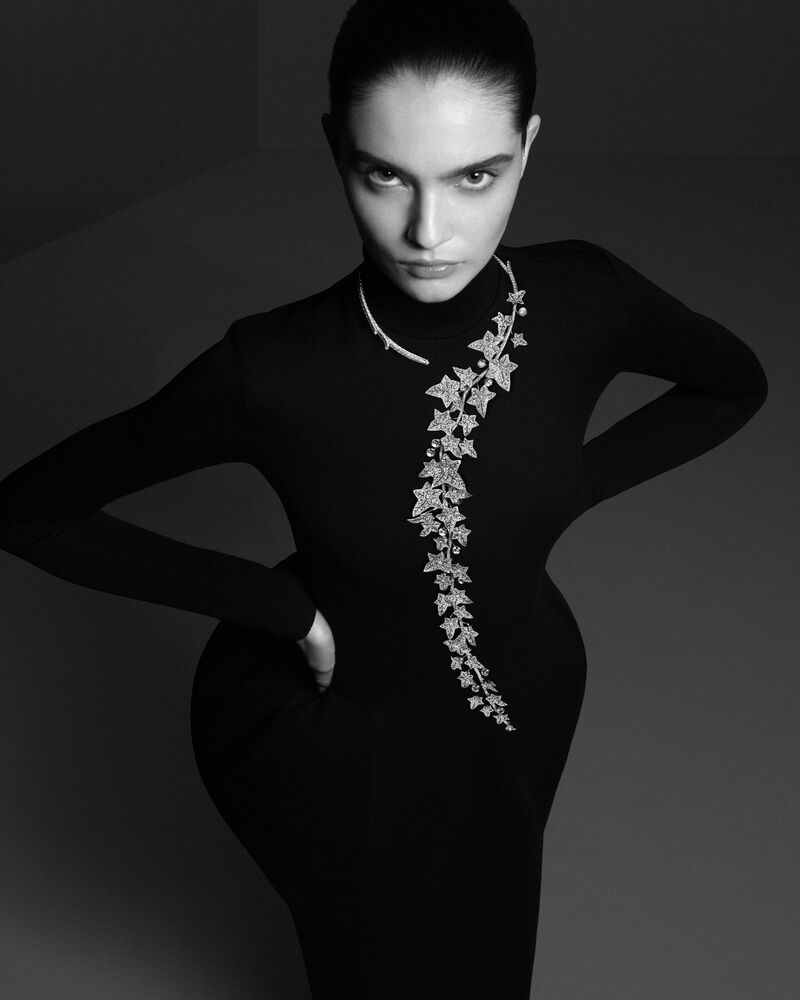
Frédéric Boucheron loved nature. Above all, he loved observing it. In an era when the natural world was stylized, tamed, and idealized, he saw the reality of it. His contemporaries favored noble plants and perfect forms, but he found beauty in the more unassuming flora and fauna, which he studied in exceptional detail and sought to render faithfully. Going against the established order, the Maison’s founder presented the natural world as it truly is. One plant in particular embodied his vision to a tee – ivy. This invasive climbing plant had a bad reputation and was considered undesirable by other jewelers, who preferred noble flowers. But Frédéric Boucheron felt an affinity for its untamed beauty. Ivy climbs, twists, and persists – it’s deeply alive, free, and real.
Claire Choisne decided to honor Frédéric by bringing to life the 1879 design of the very first Question Mark necklace. It had never been produced before, understandably: marrying its length with perfect balance posed a dual challenge, calling for an architecture of pavé-set stems and leaves mounted one by one. A multiwear system with several articulations allows the piece to be configured in different ways. Certain elements of the ivy branch are detachable, giving a range of wearing options. The Creative Director took care to reflect Frédéric Boucheron’s pursuit of naturalistic realism in this creation, with fruits of rock crystal, leaves crafted one by one, and trembling elements to inject lifelike movement; each detail is so realistic, it creates the illusion of life.
2,600 hours of work.
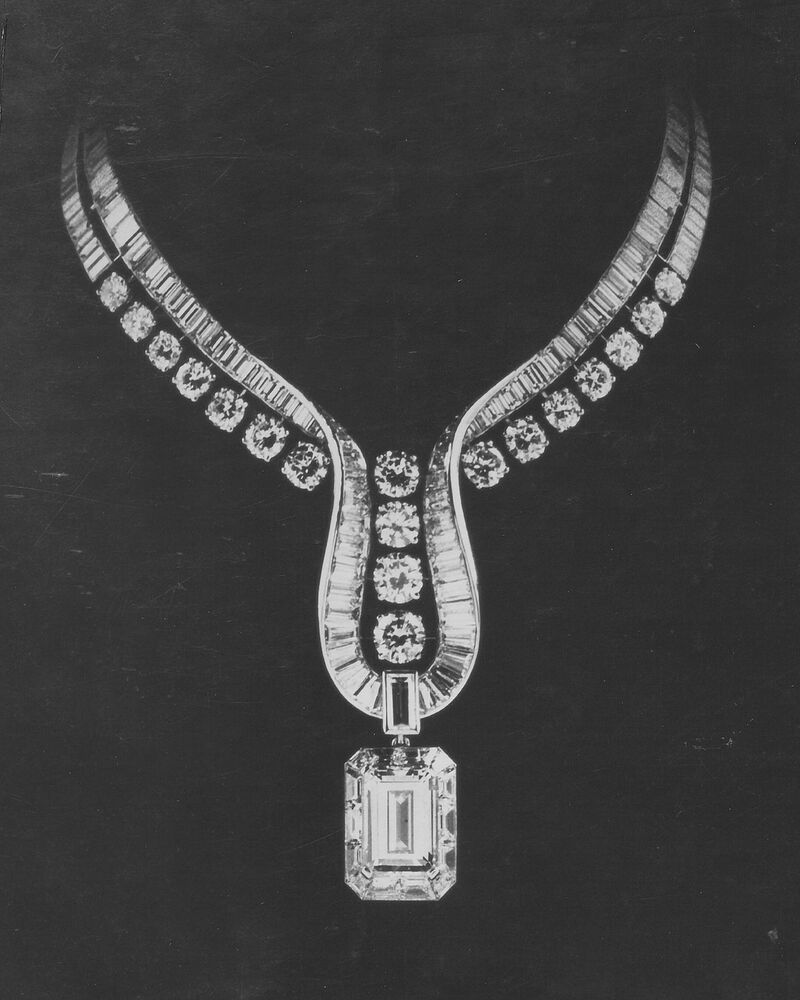
Inspiration for The Address
1939
© Archives Boucheron
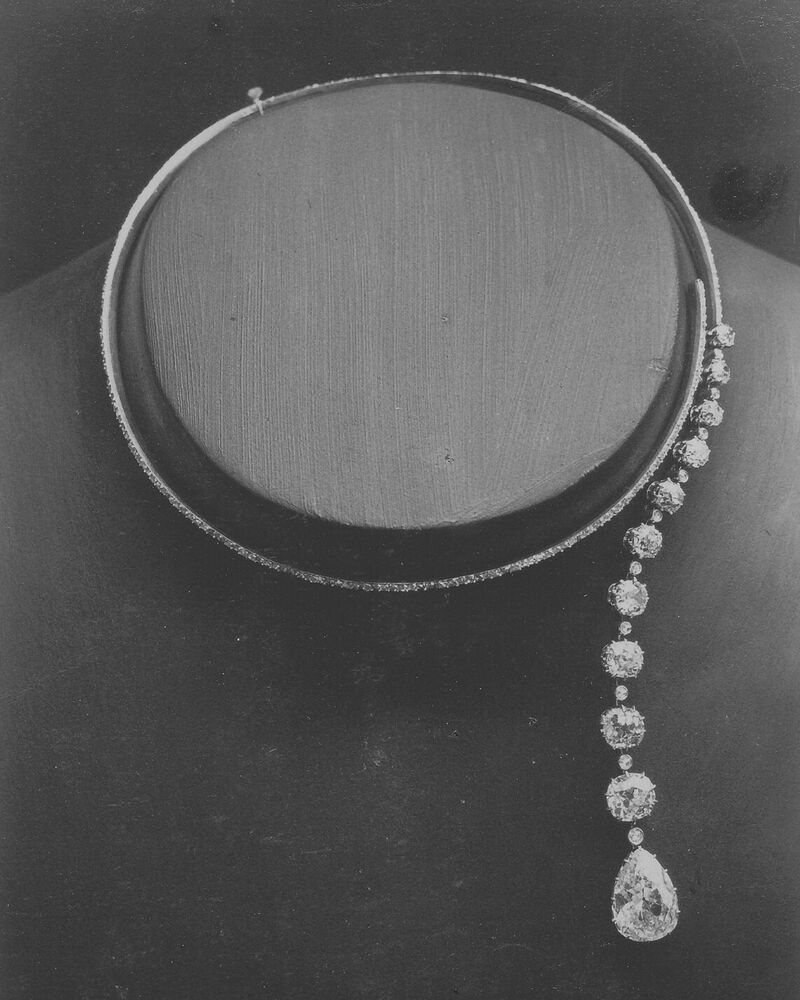
Inspiration for The Spark
1884
© Archives Boucheron
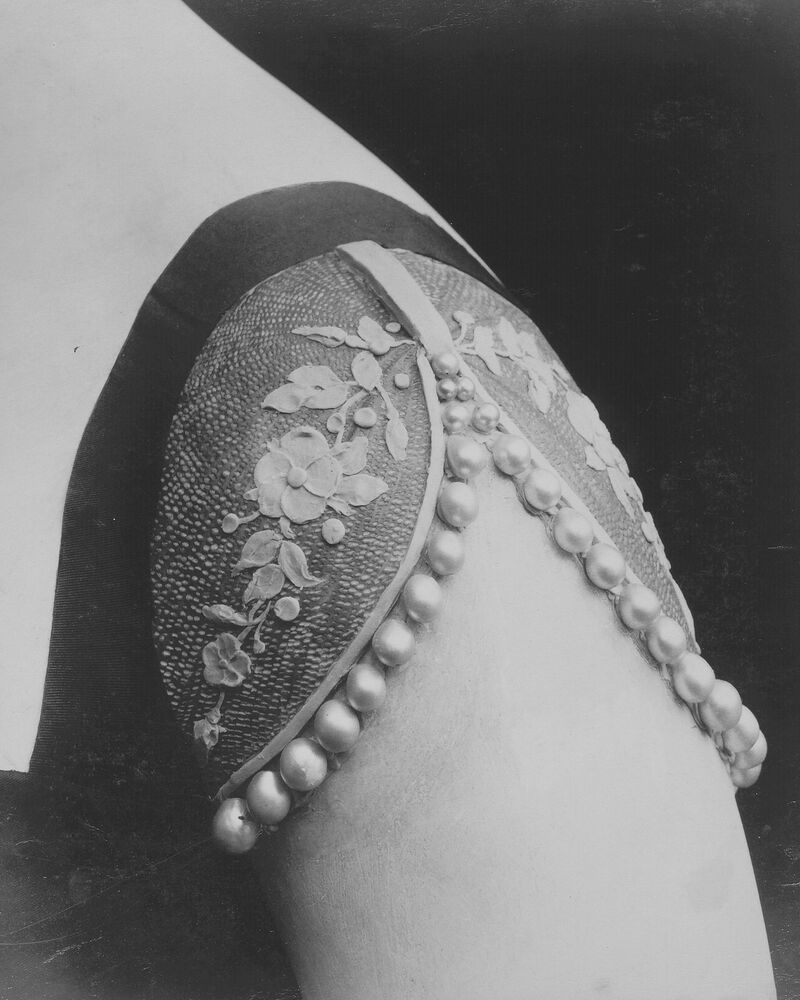
Inspiration for The Silhouette
Circa 1880
© Archives Boucheron
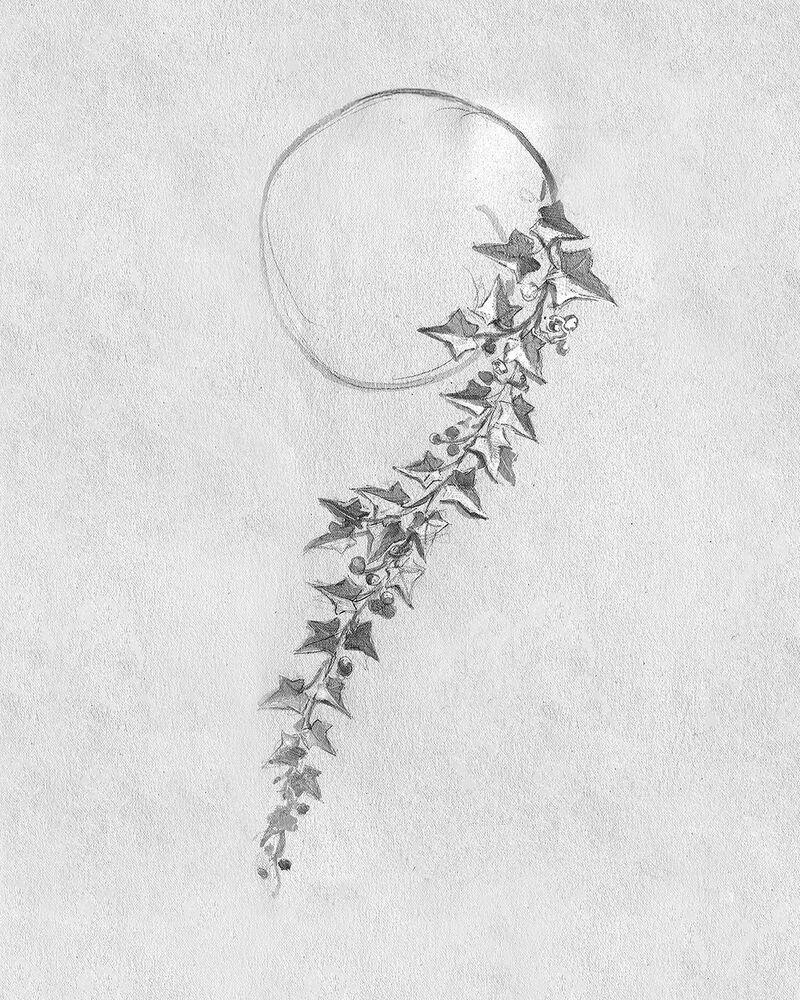
Inspiration for The Untamed
1879
© Archives Boucheron

Create a new list
Change country/region
europe
asia
middle east
americas
international
Select your language
- Français
- English
Select your language
- Français
- English
Select your language
- Français
- English
Select your language
- Français
- English
Select your language
- English
Select your language
- Français
- English
Select your language
- English
Select your language
- English
Select your language
- English
Select your language
- English
Select your language
- English
Select your language
- English
Select your language
- Français
- English
Select your language
- Français
- English
Select your language
- English
Select your language
- English
Select your language
- Français
- English
Select your language
- English
Select your language
- 中文
- English
Select your language
- 中文
- English
Select your language
- 中文
- English
Select your language
- 中文
Select your language
- 日本語
- English
Select your language
- 한국어
Select your language
- English
Select your language
- English
Select your language
- English
- العربية
Select your language
- English
- العربية
Select your language
- English
- العربية
Select your language
- English
- العربية
Select your language
- English
Select your language
- Français
- English
- Русский