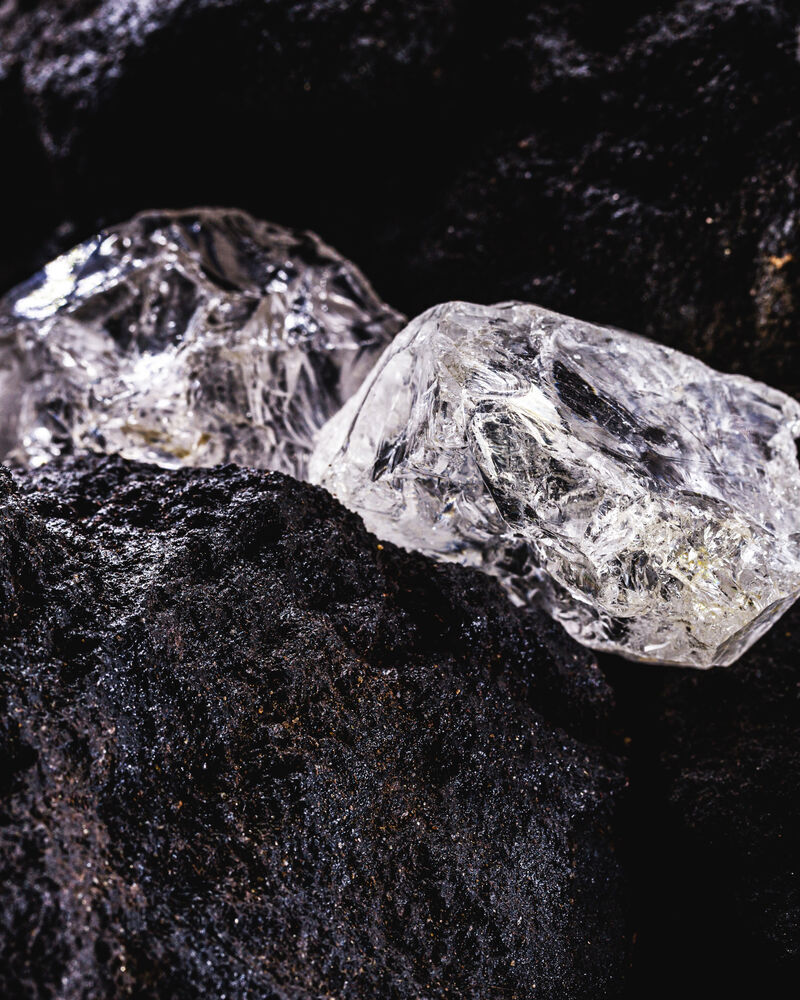
Approximately 20 million people worldwide make their living from artisanal and smallscale gold mining (ASM). Boucheron and Kering are therefore committed to limiting its purchases to gold obtained through activities that minimize harmful impacts on the environment, while generating opportunities for local communities.
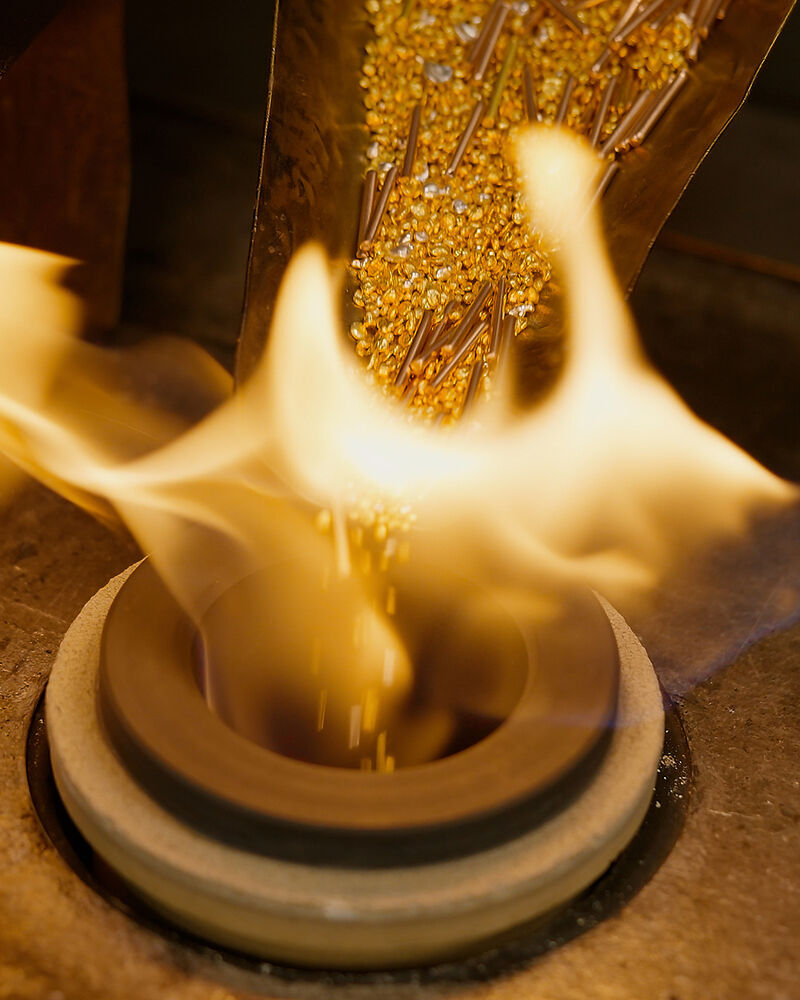
Most of the gold used by Boucheron comes from recycled sources, approximately 95% of the gold we used for production was recycled. The Kering Precious Metals Platform allows us to source responsibly, including mined gold from approved artisanal and small-scale mines (ASM) to generate opportunities for local communities and to minimize environmental harm. At Boucheron, gold sourcing means ensuring that the gold used in each jewelry piece meets the Kering Standards & Guidance for Sustainable Production.
As an active member of the Kering Precious Metals Platform, Boucheron benefits from a centralized,
transparent, ethically driven sourcing system. The platform allows Kering to vet, audit, and select accredited refiners, ensuring that the gold used by its Maisons meets strict criteria.
The sourcing options available via the Precious Metals Platform include:
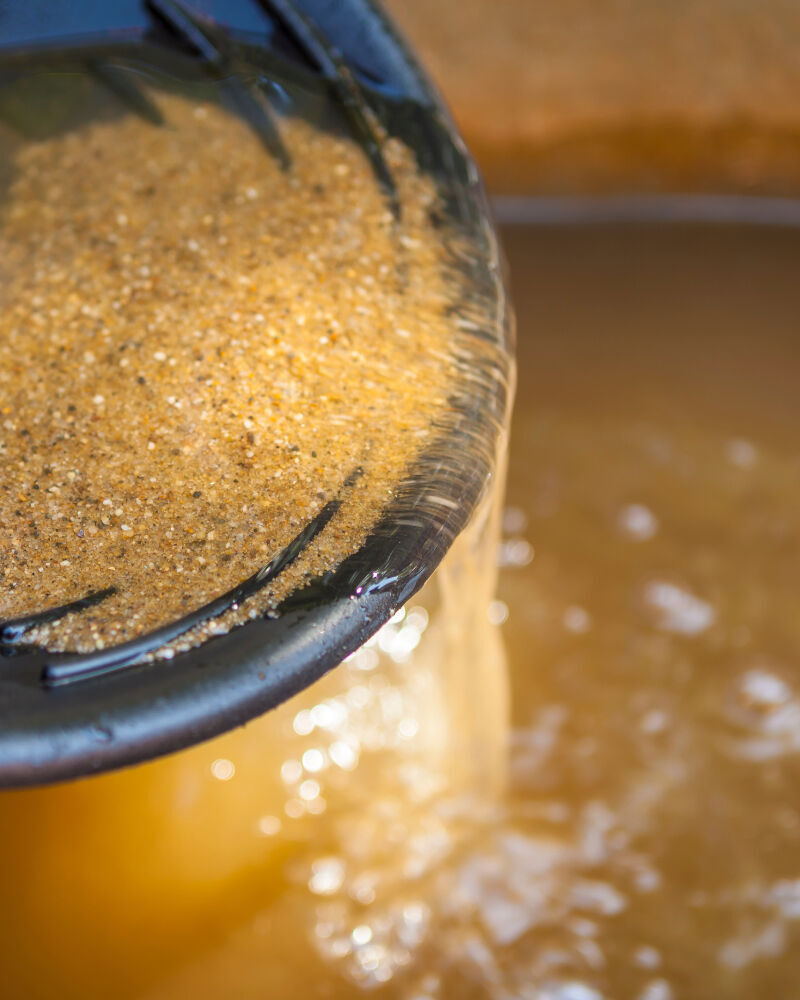
By supporting artisanal small-scale goldmining communities in their transition toward reinforcing sustainability practices, sourcing gold from selected small mines can improve and help to drive change.
Improving practices by controlling the use of chemicals and being mercury-free has a direct impact on the environment, as does using a closed water circuit to drastically reduce water usage. Moreover, health and safety precautions are rigorously observed.
We believe that supporting responsible practices in these artisanal mines is essential, as they provide vital jobs and generate resilient development within mining communities. The Kering Precious Metals Platform ensures alignment with the Kering Standards & Guidance for Sustainable Production as it supports these communities.
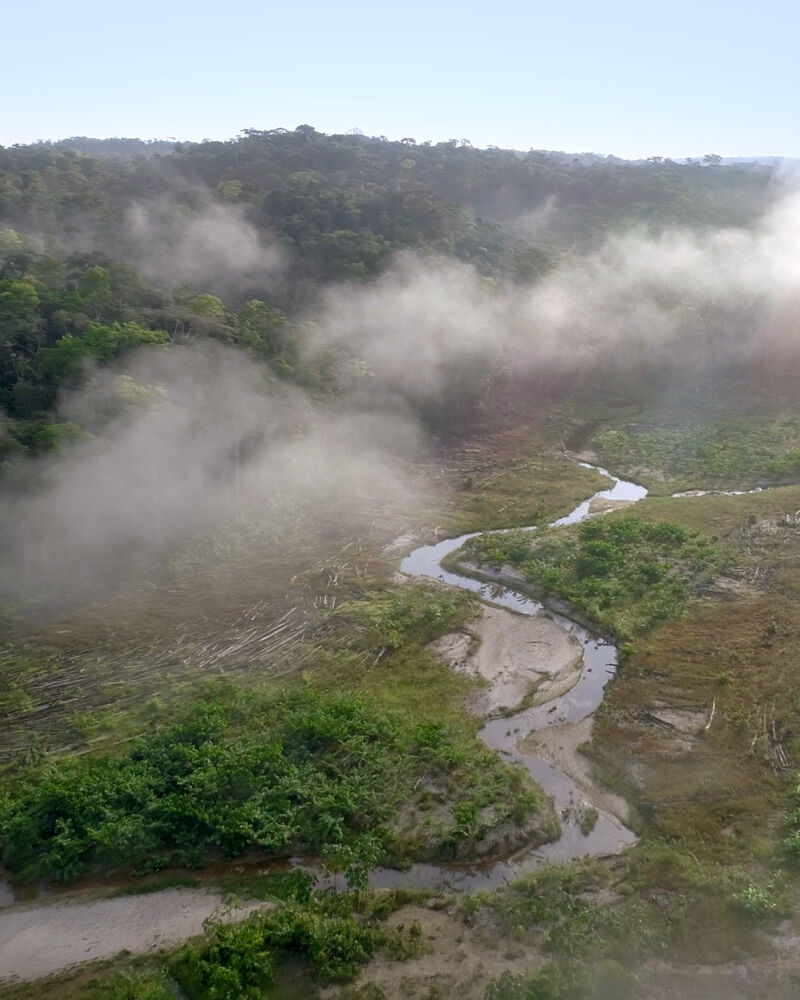
Since 2018, Boucheron has been joining Kering and its Maisons in supporting a reforestation project in French Guiana to rehabilitate five goldmining sites. The project goes beyond regulatory requirements, under which only 30% of the mined surface must be reforested. For the first time, ecological impacts are being taken fully into account through 100% reforestation. Goldmining, and particularly alluvial extraction, has long left an environmental footprint on the Amazon rainforest. This program focuses on rehabilitating degraded mining sites, fostering biodiversity resurgence, and safeguarding critical ecosystems. Since the program’s inception, over 140 hectares of land have been restored, and 300,000 trees have been planted. To date, five sites have reached full reforestation.
Change country/region