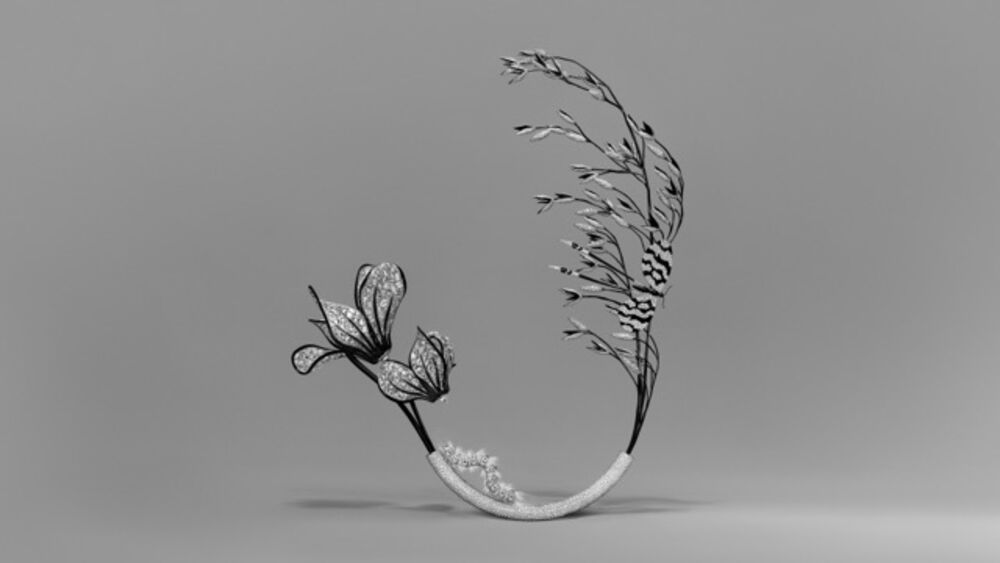
This year, Maison Boucheron dedicates its Carte Blanche to what is most precious of all: the human being. Through five jewelry sets, Claire Choisne and her studio highlight the similarities that bring us together and the differences that make each of us unique. One and the same shape runs through every creation - yet each one calls upon a different savoir-faire. Within each creation, subtle nuances emerge: a play of volume, gemstones and light, like so many expressions of our individuality. The closer you look, the more you discover, as in each of us, those details that define who we are. With this new Carte Blanche collection, Boucheron celebrates being rather than seeming.
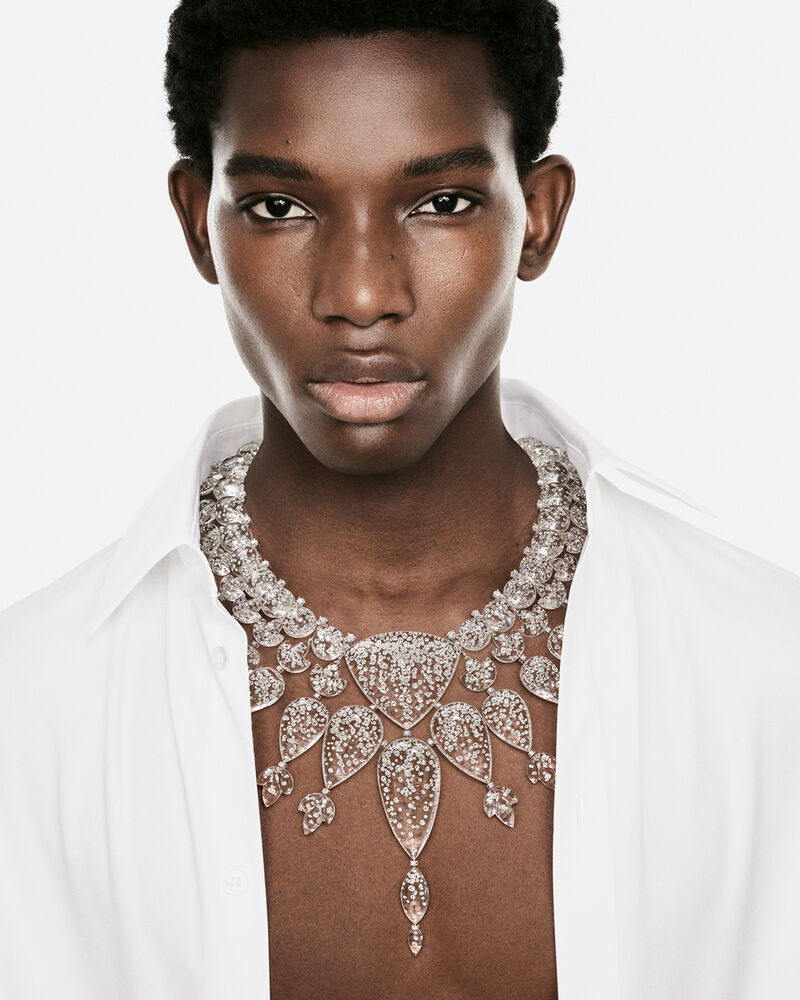
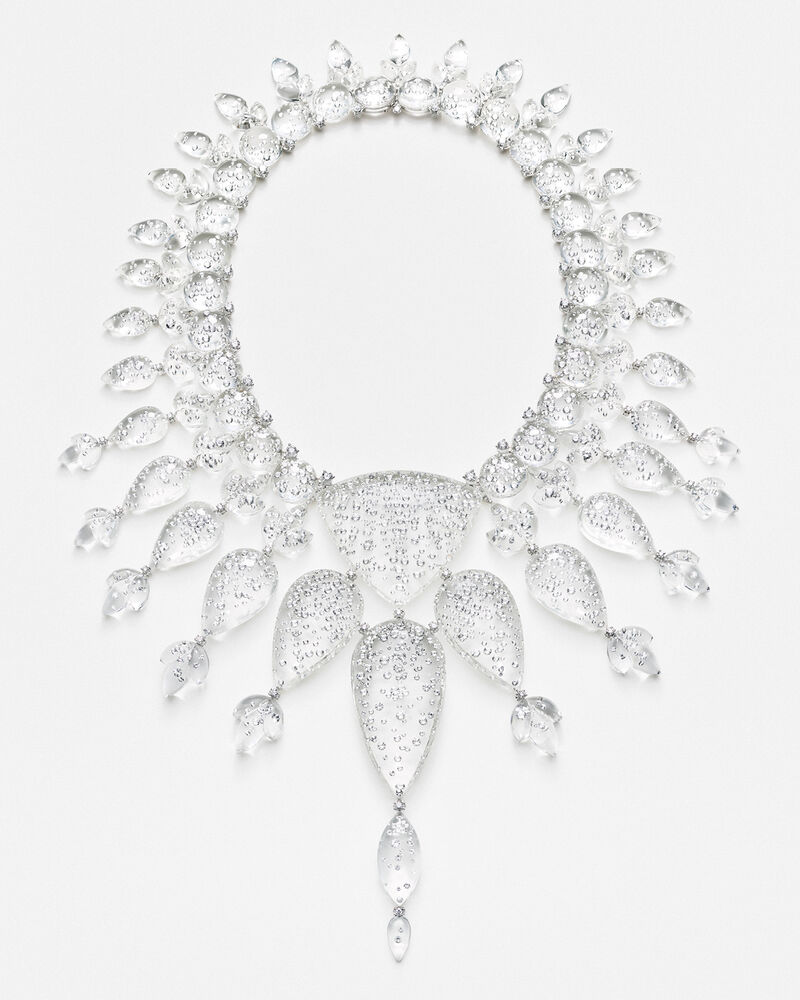
The illusion of diamonds cascading on the body.
To mimic rain, Boucheron’s artisans first crafted hollow droplets out of rock crystal, into which they then poured successive layers of plant-based resin. Over 4,800 diamonds were painstakingly placed inside these droplets by hand, layer by layer and in a very specific order, to give a three-dimensional effect. This process was carried out in a vacuum to prevent any microparticles or air bubbles from forming.
1,550 hours of work for the set.
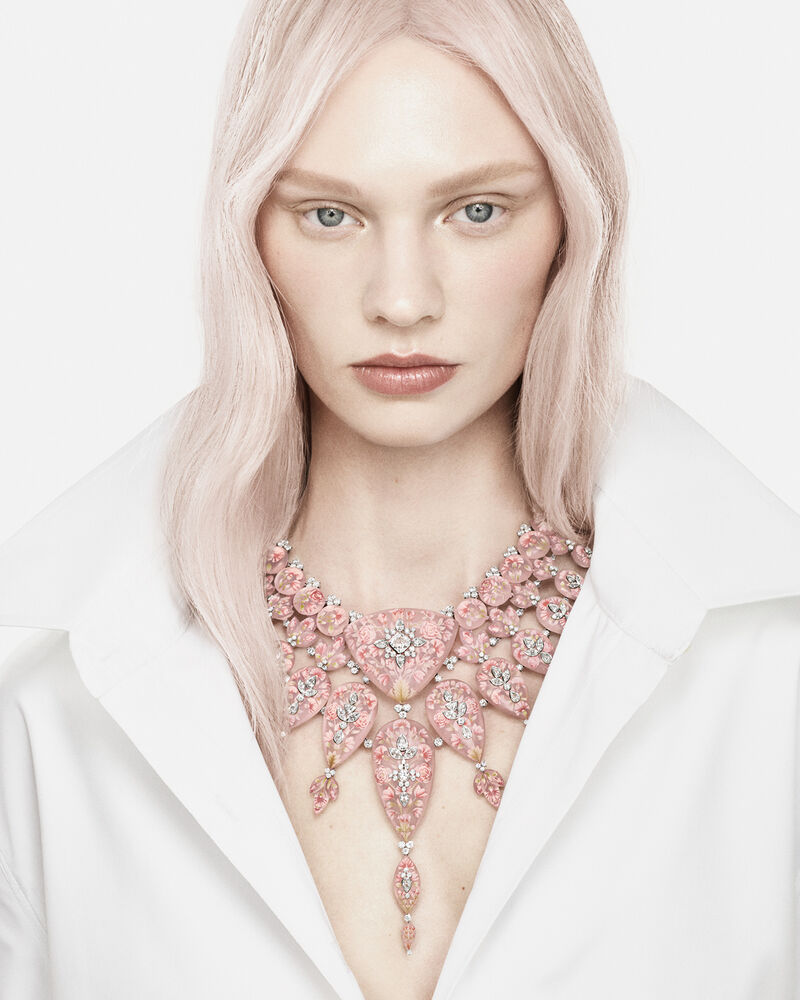
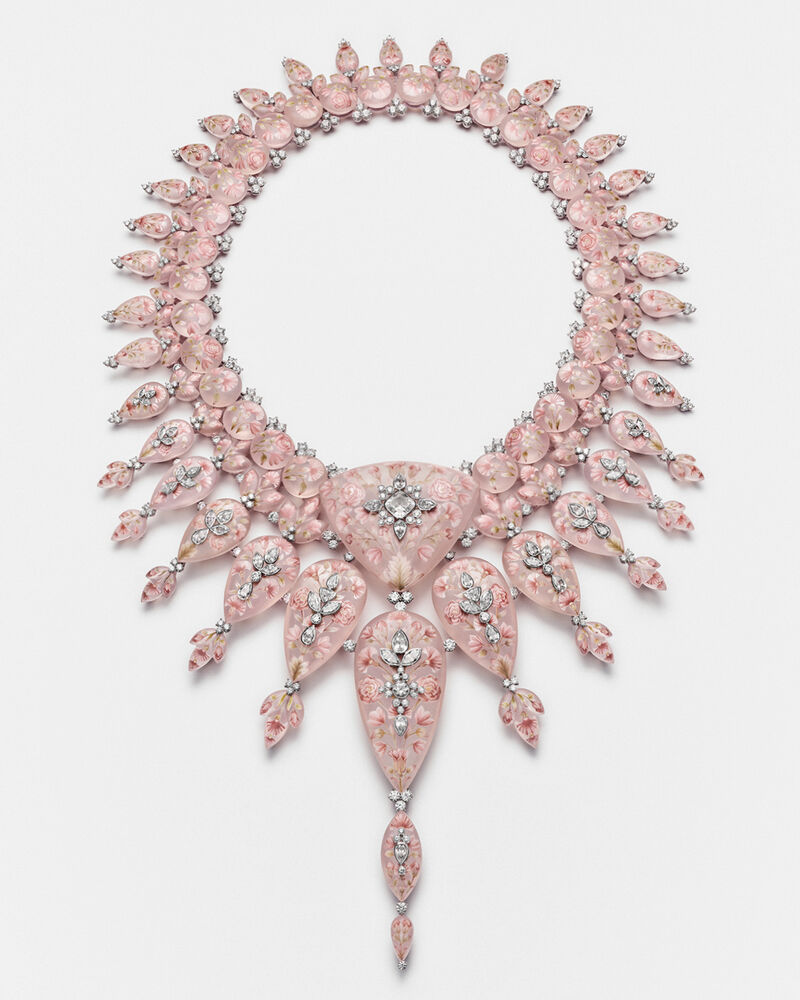
A floral motif, like a richly patterned wallpaper.
To bring this botanical design to life, Boucheron called on the skills of a painter of micro-miniatures. This extremely intricate art is executed at a tiny scale, using shadows and light to create the illusion of depth. Each rose quartz that makes up the set was painted individually under magnification. Painting in such microscopic detail posed a real challenge for the artist, as the floral motif had to be precisely replicated on every stone.
3,290 hours of work for the set.
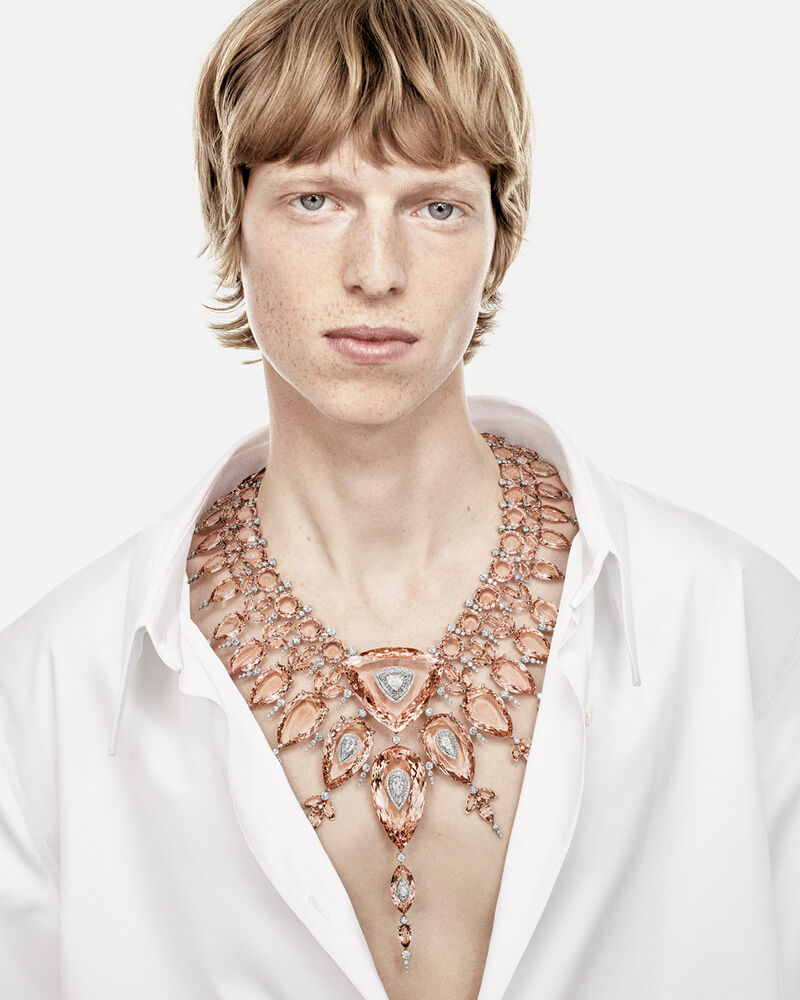
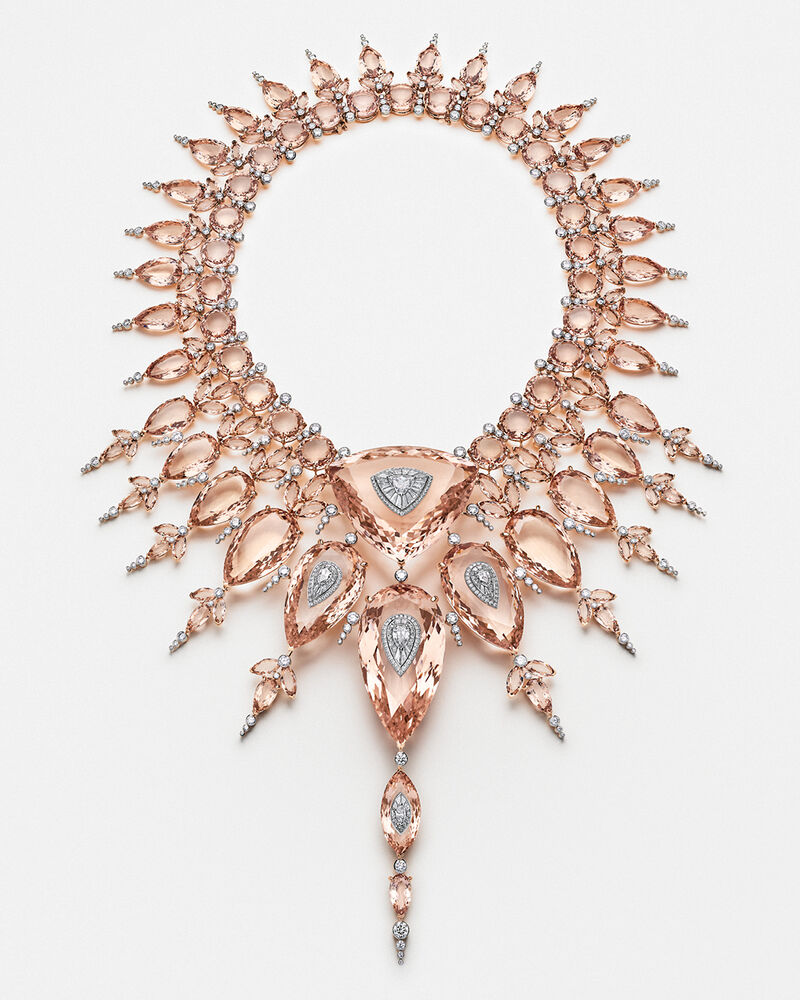
A light that springs from the depths of the stones.
To bring forth this light, over 1,500 carats of morganites of the exact same color intensity first had to be assembled. Yet it was the mounting that posed the main challenge for Boucheron’s artisans: to avoid any pressure being exerted on the morganites, they fitted and screwed the prongs around each stone. Adding to the complexity, the design called for the diamonds to be directly set into the morganites; this entailed hollowing out the morganites to accommodate an invisible metal framework, into which the diamonds were then set.
3,750 hours of work for the set.
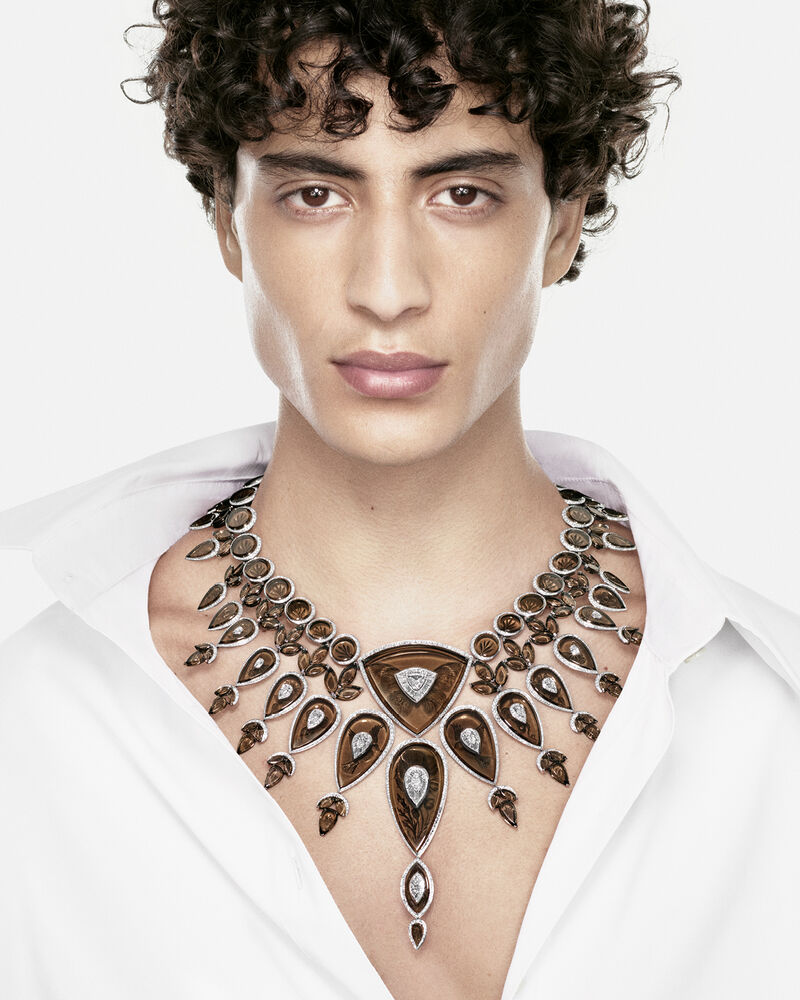
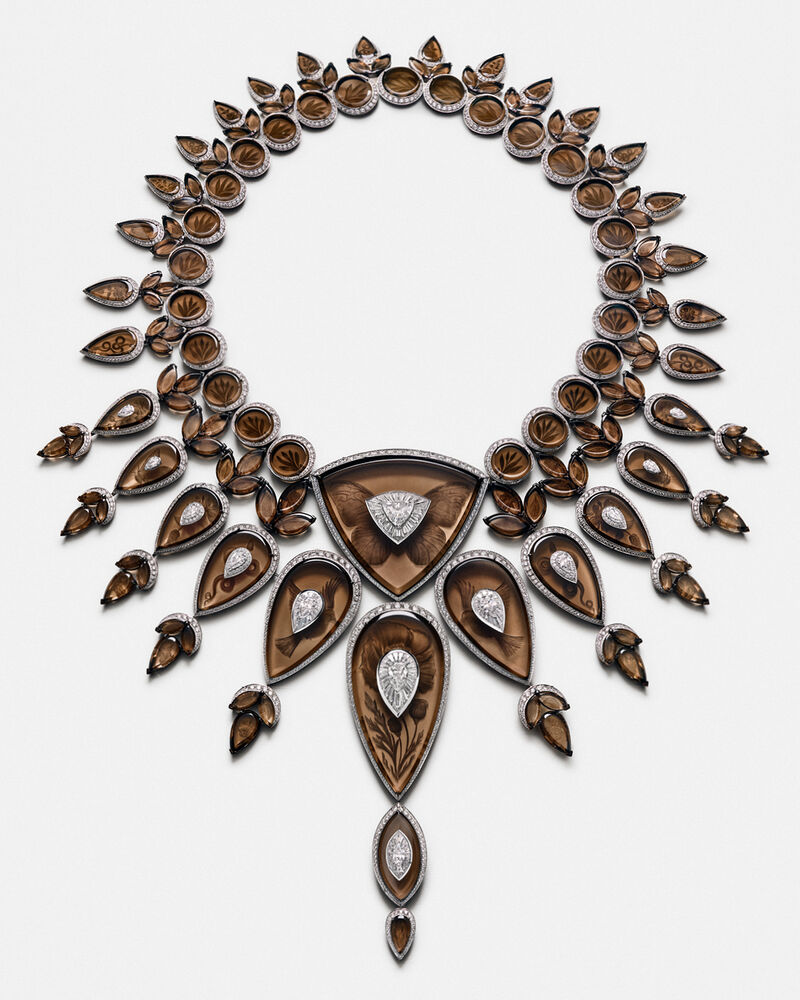
Victorian tattoos, carved into stone.
To create the illusion of a real tattoo, the ancient art of glyptics was used to carve sculptural forms into the reverse side of smoky quartzes, giving a bas-relief effect. Since this engraving technique doesn’t allow for the use of color to bring out its finer details, these can only be revealed through subtle variations in depth. To achieve perfect symmetry across the repeated motifs, the artisan invented over 200 of their own tools to craft these pieces.
3,740 hours of work for the set.
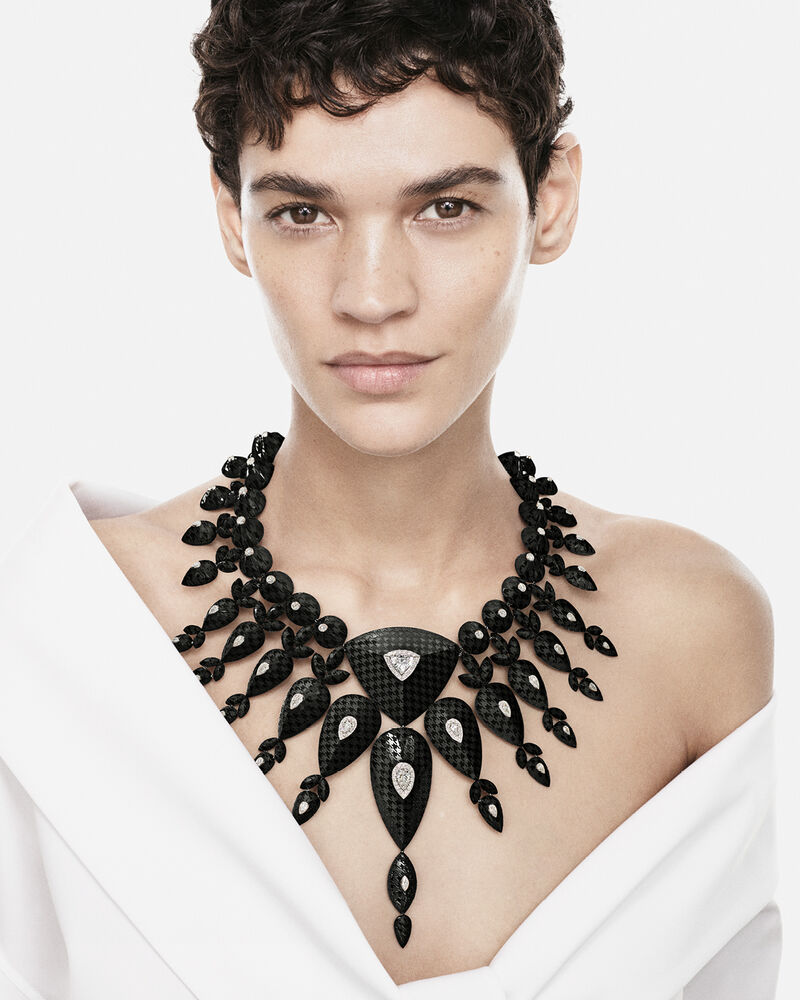
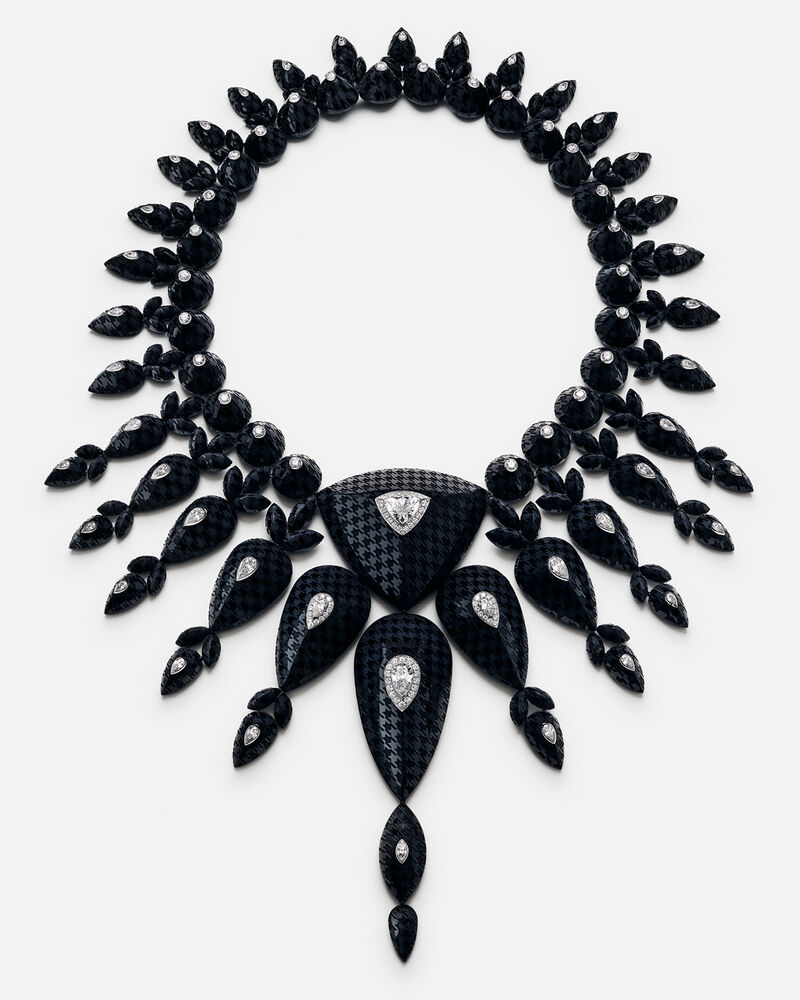
A houndstooth weave, reminiscent of a garment.
To inscribe the houndstooth pattern into onyx, Boucheron used an incredibly precise technology, the femtosecond laser. By emitting a series of ultra-fast micro-impulses, it removed material from the 163 stones without compromising their integrity. The aim was to create the illusion of a genuine houndstooth weave draped across the necklace. Extensive CAD modeling was used to create a flawless optical effect that the eye perceives as a single uninterrupted pattern.
1,990 hours of work for the set.
Change country/region